Reactive Dog vs. Aggressive Dog: What's the Difference, and Why It Matters
By Bart Merrell ·
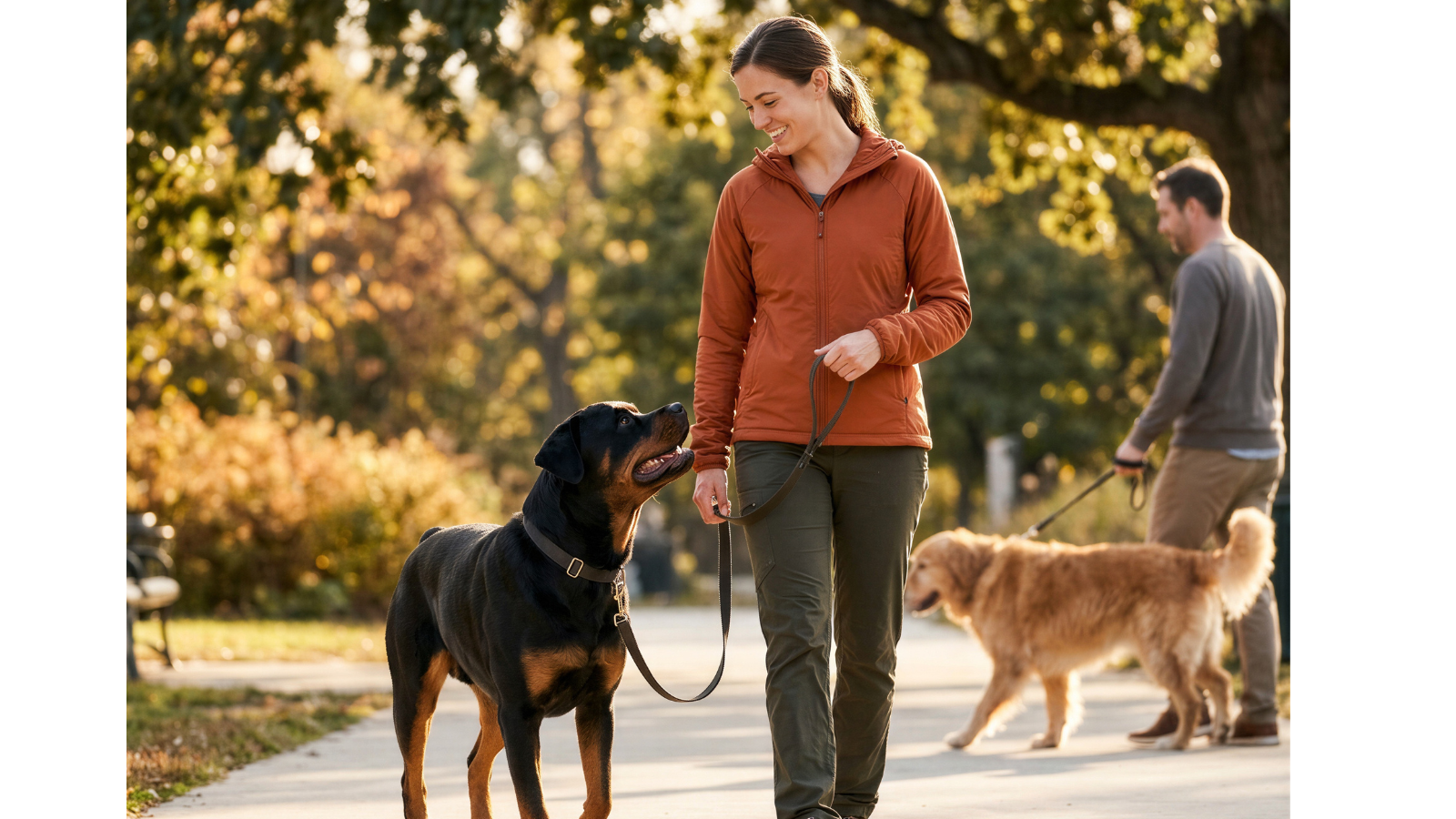
Reactive and aggressive dogs look similar from the outside but need very different plans. Here's how we tell them apart and how we help each one.
At Top Dog Dog Training, one of the most common phrases we hear from owners is, "My dog is aggressive." Sometimes that is exactly the right word. A lot of the time, though, the dog in front of us is not aggressive at all. That dog is reactive. The difference is not just semantics, and it is not us splitting hairs. Understanding which one you are dealing with changes everything about how you help your dog move forward.
We build our training on a simple belief: there are no bad dogs, only dogs who have not been given the leadership, structure, and clear communication they need to succeed. Behind almost every "problem behavior" is a dog trying to solve a problem the only way it knows how. Our job is to understand the dog in front of us, meet its needs, and give it a better answer. That starts with correctly reading what the behavior is actually telling us.
What Reactivity Actually Is
Reactivity is an over-the-top emotional response to a trigger. The trigger might be another dog on the walk, a skateboard, a stranger at the door, a bicycle, or a squirrel that will not stop existing. The dog lunges, barks, spins, whines, or pulls hard at the end of the leash. To a bystander it can look scary, and it certainly feels overwhelming to hold on to.
Here is the key: most reactivity is rooted in emotion, not in a genuine desire to do harm. The dog is usually frustrated, over-aroused, insecure, or afraid. A reactive dog on leash is often the same dog who would happily run and play if it were off leash with that other dog in a safe setting. The leash, the barrier, and the buildup of arousal trap that emotion and it comes flying out sideways. If the leash itself is a big part of the problem, how to stop your dog from pulling on the leash is a good next read.
Reactivity tends to show a few common patterns. The response is loud and dramatic but is often about creating distance or discharging tension rather than closing in for a fight. It frequently spikes on leash, behind fences, or in windows, where the dog feels stuck and cannot make its own choices. And it usually fades once the trigger is gone and the dog is allowed to settle. A reactive dog is a dog whose emotional thermostat is set too high and who has never been taught how to bring it back down.
What Aggression Actually Is
Aggression is intent. An aggressive dog is not just overwhelmed by emotion, it is willing to use its teeth to change the outcome. The goal of the behavior is to make contact, to warn with real commitment, or to control a situation through force. This can show up as resource guarding that escalates to biting, defensive aggression when the dog feels cornered, territorial aggression, or, in more serious cases, offensive aggression where the dog seeks out the confrontation.
Aggression is often quieter and more deliberate than reactivity. A hard stare, a stillness, a low freeze, a closed mouth, weight shifting forward. These can be far more meaningful than a dog making a loud scene. Reactivity is frequently the dog shouting, "Go away." True aggression is the dog saying, "I will make you go away," and meaning it.
That said, the two are not neatly separated boxes, and this is where careful evaluation matters. Reactivity that is misread, mishandled, or repeatedly pushed over threshold can, over time, harden into aggression. A dog that rehearses being out of control for months or years, and that learns its outbursts work, can develop a genuine bite history. This is exactly why we take reactivity seriously instead of waving it off as "just leash manners." The behavior you allow to be practiced is the behavior you are training.
Why the Distinction Matters So Much
If you treat a reactive dog like an aggressive dog, you risk suppressing a dog who was mostly just frustrated and never dangerous. If you treat an aggressive dog like a simple reactive dog, you can put people and animals at real risk by underestimating what the dog is actually communicating.
Our approach borrows heavily from the trainers who have shaped how we think about this work. From the balanced, relationship-first philosophy that made "no bad dogs" a rallying cry, we take the conviction that these dogs are not broken. They need advocacy, leadership, structure, and their physical, mental, and emotional needs genuinely met, not just obedience drilled on top of an unfulfilled animal. From the motivation and marker-based tradition of Michael Ellis, we take a deep respect for how dogs actually learn: build engagement and clear communication first, teach the dog what to do before we ever hold it accountable, and understand that every dog is different and deserves a plan built around the individual, not a cookie-cutter program. If you want the longer version of how we think about method, see balanced vs. positive-only dog training.
Put those together and you get our process. We do not start by correcting the outburst. We start by understanding it. We lower arousal, rebuild the relationship, teach the dog a clear and reliable set of behaviors it can lean on, and change how the dog feels about the trigger, all while advocating for that dog and keeping everyone safe. Corrections, when they are used, are fair, well timed, and only meaningful once the dog clearly understands the behavior we are asking for. That is the difference between training a dog and simply punishing one. For serious cases, our in-home board & train gives us the time and control to rewire the pattern; for owners who want to do the work themselves with weekly coaching, 1-on-1 training is often the better fit.
The Bottom Line
Reactivity is usually an emotional problem wearing a scary costume. Aggression is a safety problem that demands honesty and skill. Most reactive dogs can make dramatic progress once they are given real leadership and taught how to regulate themselves. Many aggressive dogs can improve too, sometimes remarkably, but the plan, the timeline, and the level of management involved are different, and no responsible trainer should promise otherwise.
If you are not sure which one you are living with, that is completely normal, and it is exactly what an evaluation is for. Getting an honest read from an experienced set of eyes is the single most useful first step you can take.
"There are no bad dogs. There are dogs who have not been taught a better way to handle the world."
Ready to figure out what your dog actually needs?
Reach out to Top Dog Dog Training to schedule a free evaluation, and let's build a plan around the dog in front of us. Call us at (801) 592-1524. We serve Salt Lake, Utah, Summit, and Weber counties.
Frequently asked questions
Keep reading



Written by Bart Merrell, certified dog trainer at Top Dog Dog Training.