How to Stop Your Dog From Pulling on the Leash
By Jeff Belnap ·
The real reason your dog pulls, why 'stop and go' rarely works, and the exact handling changes that fix leash walking for good.
Leash pulling is the number one complaint we hear from Utah dog owners. It ruins walks, wrecks shoulders, and eventually makes people just stop taking the dog out at all. The good news is that it's fixable. The bad news is that most of the advice you'll find online is garbage that treats the symptom instead of the cause. Let me give you the real version.
The real reason your dog pulls
Your dog pulls because it works. Every single time she pulled and got one step closer to a smell, a squirrel, or the front door, you paid her for it. Dogs are excellent at math. Behavior that pays gets repeated, and behavior that stops paying fades away. That's the whole mystery, and once you understand it, the fix makes sense.
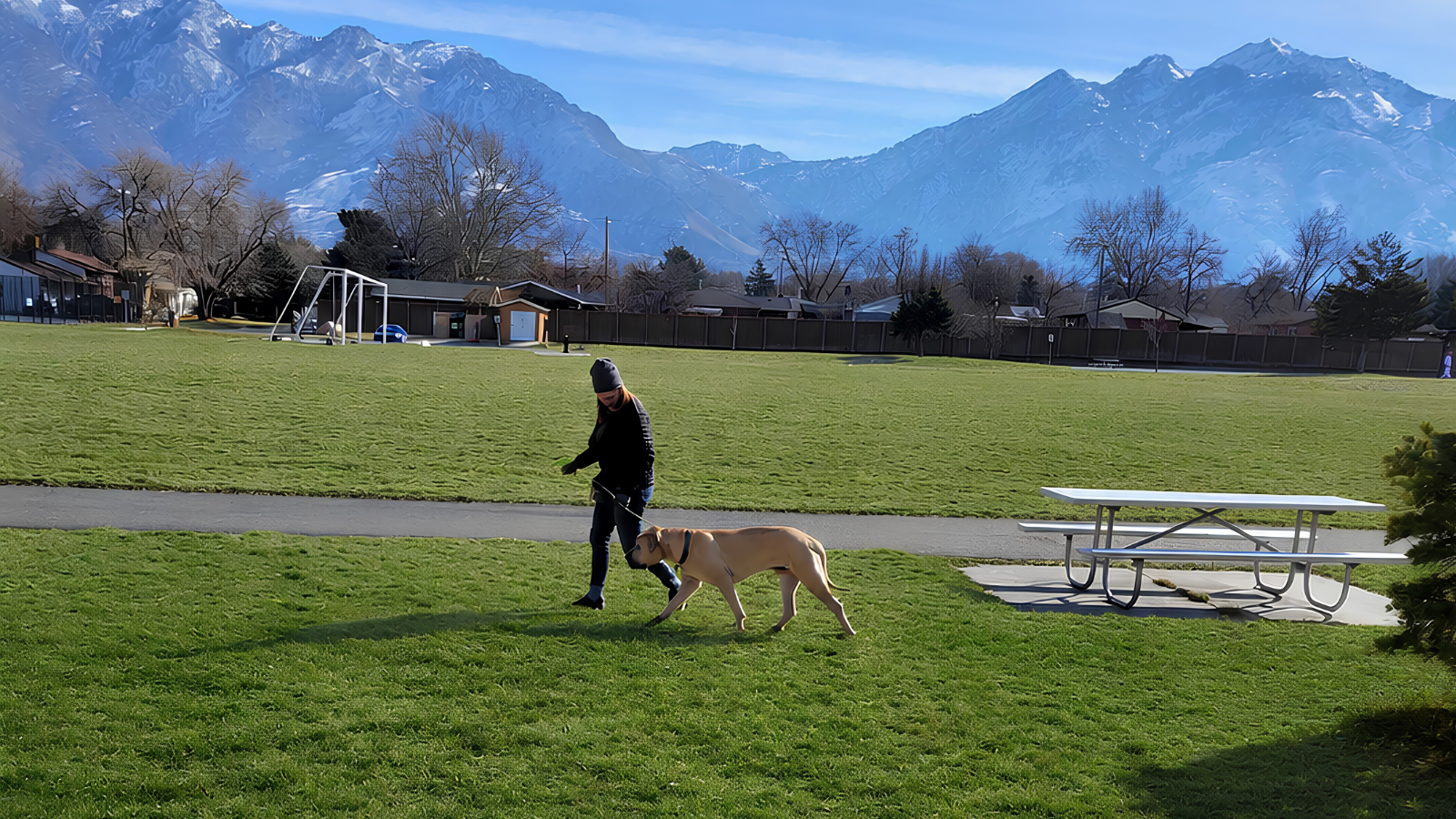
Here's a clue you've probably seen yourself: a lot of dogs heel beautifully in the backyard and turn into freight trains the second you hit the sidewalk. That's not your dog being stubborn. It's your dog knowing exactly where the good stuff is, and the good stuff is out there, not in the yard. Pulling is just the strategy that's always gotten them there.
Before you start, check your equipment
This trips people up before they even begin. If you're walking on a retractable leash, put it away. A retractable literally trains pulling, because the harder your dog pulls, the more line they get. You're paying them for tension with more freedom, which is the exact opposite of the lesson. Switch to a fixed-length leash, four to six feet, so "loose" and "tight" actually mean something consistent to your dog. You can't teach a loose leash on a leash that's designed to never be loose.
Why "stop and go" rarely fixes it
The most common advice out there is to stop walking when the dog pulls and start again when the leash goes slack. It sort of works and sort of doesn't. The problem is what it actually teaches: that pulling comes with a short delay built in, not that pulling stops paying. Most dogs just learn a new rhythm, pull, pause, pull, pause. That's not a loose leash. That's a slightly interrupted pull, and you'll be doing it forever.
What actually works
Three things, in this order.
Change direction the moment the leash goes tight. Don't wait, don't warn, don't nag. The instant you feel tension, calmly turn and walk the other way. This is the big one. It makes pulling stop working, because pulling no longer gets your dog closer to anything. Suddenly the fastest route to where they want to go is right next to you.
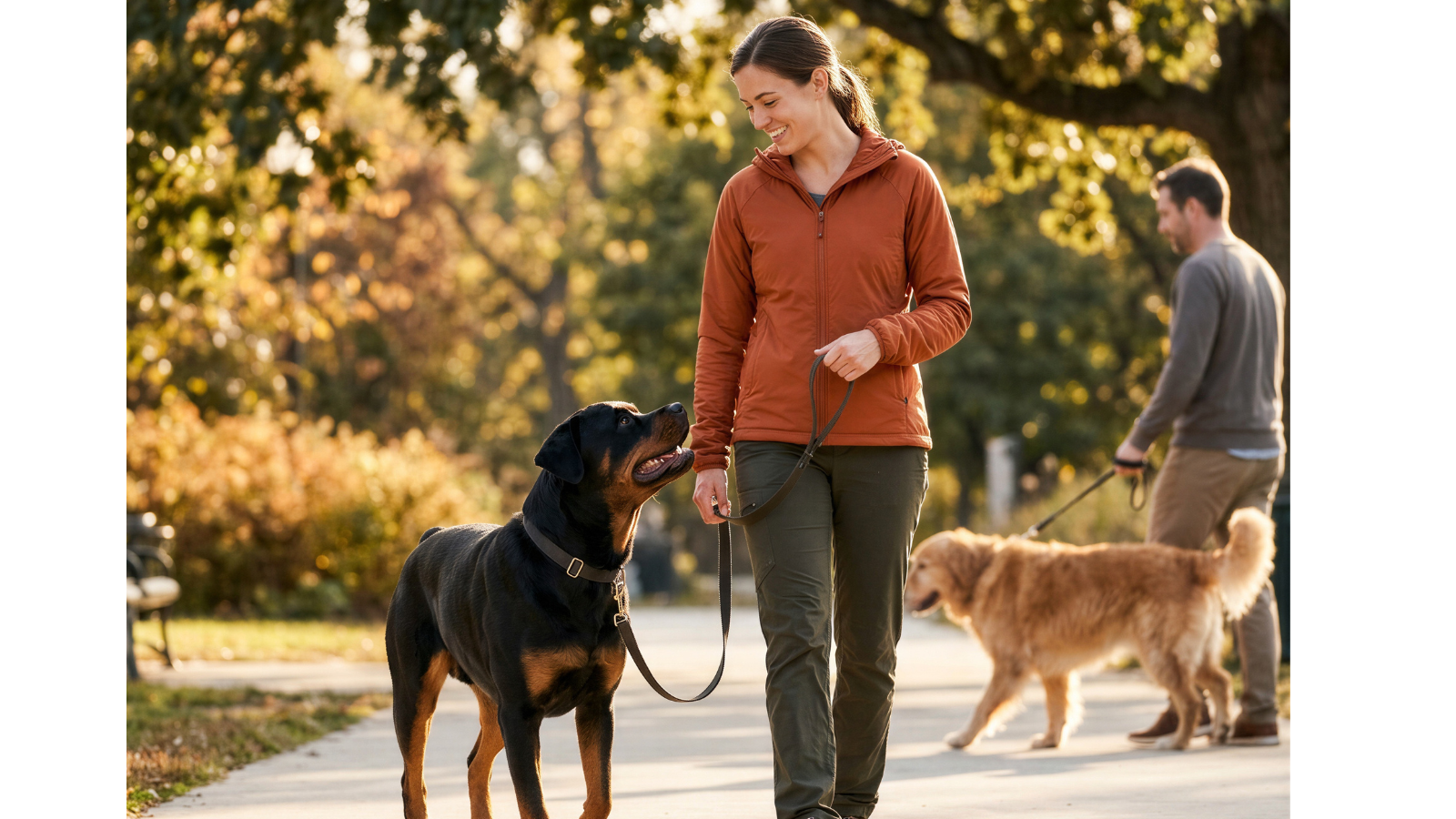
Pay heavily for being in position. When your dog is in the sweet spot beside you on a loose leash, pay up, with food, praise, whatever your dog actually values. Most people only react to the pulling and completely ignore the dog when they're doing it right. Flip that. Catch and reward the good position constantly, especially early on.
Add clear communication with the right tool, once the foundation is there. After your dog understands the rules from the first two steps, a properly fitted prong or e-collar can give clear, low-level communication that makes the loose leash reliable out in the real world. The order matters, though. The tool never comes first. It reinforces a lesson the dog already understands, the same way we approach every tool we use.
The handler stuff nobody mentions
Here's a hard truth: most pulling problems have a handler component, and it's usually invisible to the person holding the leash. The common mistakes are the leash wrapped around your hand three times, your arm locked out straight and rigid, no slack in the line ever, or a constant stream of little nagging corrections that your dog has completely tuned out.
A loose leash is the goal, and you can't teach it if your leash is never actually loose. Relax your arm. Give your dog a defined amount of line and let it hang in a soft J-shape when they're in position. If the only thing your dog has ever felt is steady tension, they have no way to learn what "loose" even means. You have to give them the contrast.
Consistency is the whole game
One more thing, because it's the difference between success and spinning your wheels. Every walk teaches your dog something. If you enforce the loose leash on Monday and let them drag you to the mailbox on Tuesday because you're in a hurry, you've taught them that the rules are negotiable, and pulling is worth a try every single time. Pick your approach and run it on every walk, by every person who holds the leash. The dogs who fix this fastest belong to owners who are boringly consistent.
When to call for help
If your dog is large or powerful, has been pulling for years, or is truly reactive on-leash (lunging or barking at other dogs), get hands-on help through our one-on-one training rather than fighting it alone. Leash pulling is honestly one of the fastest problems to turn around with a real trainer, and the reactive piece in particular is tough to fix from an article, because you're dealing with emotion, not just habit. Usually the first session pays for itself in shoulder pain avoided.
"The fastest way to where your dog wants to go should always be right next to you. That's the whole trick."
Tired of getting dragged down the block?
If you're done dreading walks, let us help. Book a free evaluation and we'll show you exactly what your specific dog needs. Call us at (801) 592-1524. We serve Salt Lake, Utah, Summit, and Weber counties.
Frequently asked questions
Keep reading
Written by Jeff Belnap, certified dog trainer at Top Dog Dog Training.