How to Prep Your Puppy Before Board & Train
By Bart Merrell ·
When folks drop their puppy off with us for board & train, the first thing a lot of them ask is, "Is there anything I should do to get him ready?" The answer is yes — a handful of small things in the weeks before drop-off make his stay calmer, his learning faster, and the whole experience easier on everybody.
When folks drop their puppy off with us for board & train, the first thing a lot of them ask is, "Is there anything I should do to get him ready?" The answer is yes. Not a lot, and nothing complicated, but a handful of small things in the weeks before drop-off can make your puppy's stay calmer, his learning faster, and the whole experience easier on everybody, including him.
Here's the honest truth about it. We do the heavy lifting. That's the whole point of board & train. But a puppy who already feels okay in a crate, likes his food, and doesn't come unglued when a new person picks up the leash walks in with a head start. Instead of spending his first few days just catching his breath, he gets to work. So if you've got a few weeks before drop-off, here's how to spend them.
The theme running through all of this is simple, and it's the same thing the best trainers in the country preach: build a puppy who wants to engage and who finds good things worth working for. You are not trying to teach him obedience before he gets here. You are trying to hand us a puppy who is ready to learn.
Make the crate a good place
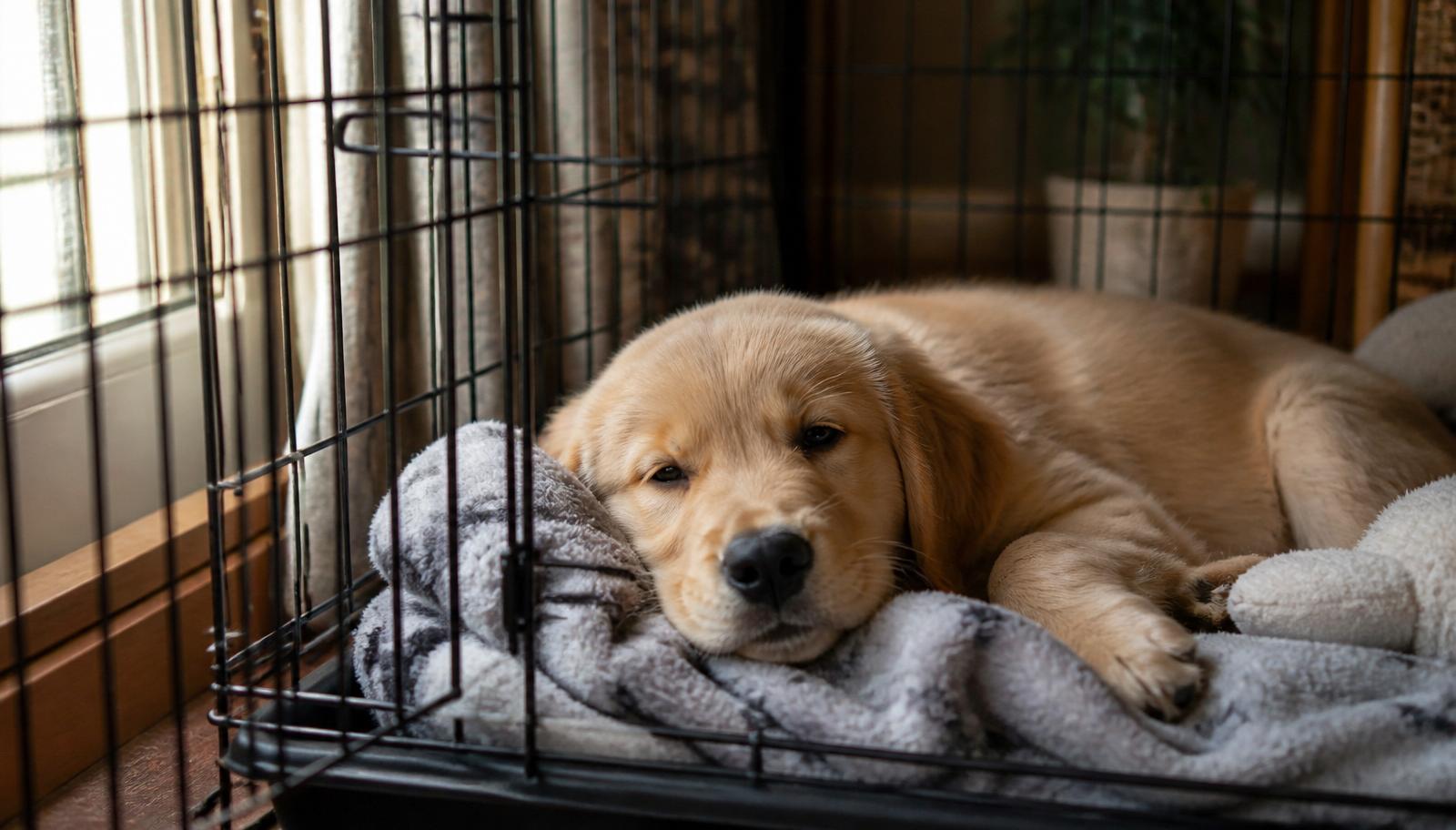
The crate is going to be part of your puppy's daily life with us, so the kindest thing you can do is make it a spot he already likes before he ever gets here. Too many puppies only meet a crate for the first time on a stressful day, and that's a rough way to learn about it.
Start feeding him in the crate with the door open. Toss a few treats in there through the day and let him come and go. Give him a stuffed chew in there so good things happen inside those four walls. Work up to closing the door for a minute, then a few minutes, then a short nap. You are not trying to make him love being locked up. You are just teaching him that the crate is a normal, safe, boring place to rest, not a punishment. A puppy who already naps in a crate settles into board & train in a fraction of the time.
Feed meals, not a buffet
If your puppy's food bowl sits out all day, do yourself a favor and switch to real meals. Put the food down, give him ten or fifteen minutes, then pick it up whether he finished or not.
There's a reason for this beyond good habits. In training, food is currency. It's how we pay a young dog for good choices, and a puppy who has grazed on a full bowl all day has no reason to work for a piece of kibble. A puppy who eats on a schedule shows up hungry to learn and thinks his food is worth something. That single change makes marker training and motivation work go a whole lot smoother. You are basically raising the value of the paycheck before he ever clocks in.
Get your hands on him
Your puppy is going to be handled by new people, so get him used to being touched all over before he comes. Handle his paws, look in his ears, run your hands down his legs and tail, open his mouth, hold his collar. Keep it calm and pair it with a treat so it's a good experience, not a wrestling match.
A puppy who is comfortable being handled is easier to keep safe, easier to groom, easier at the vet, and a lot less stressed when someone he just met needs to guide him. This is one of those small things nobody thinks about until the dog is squirming away from a nail trim.
Let him wear the gear
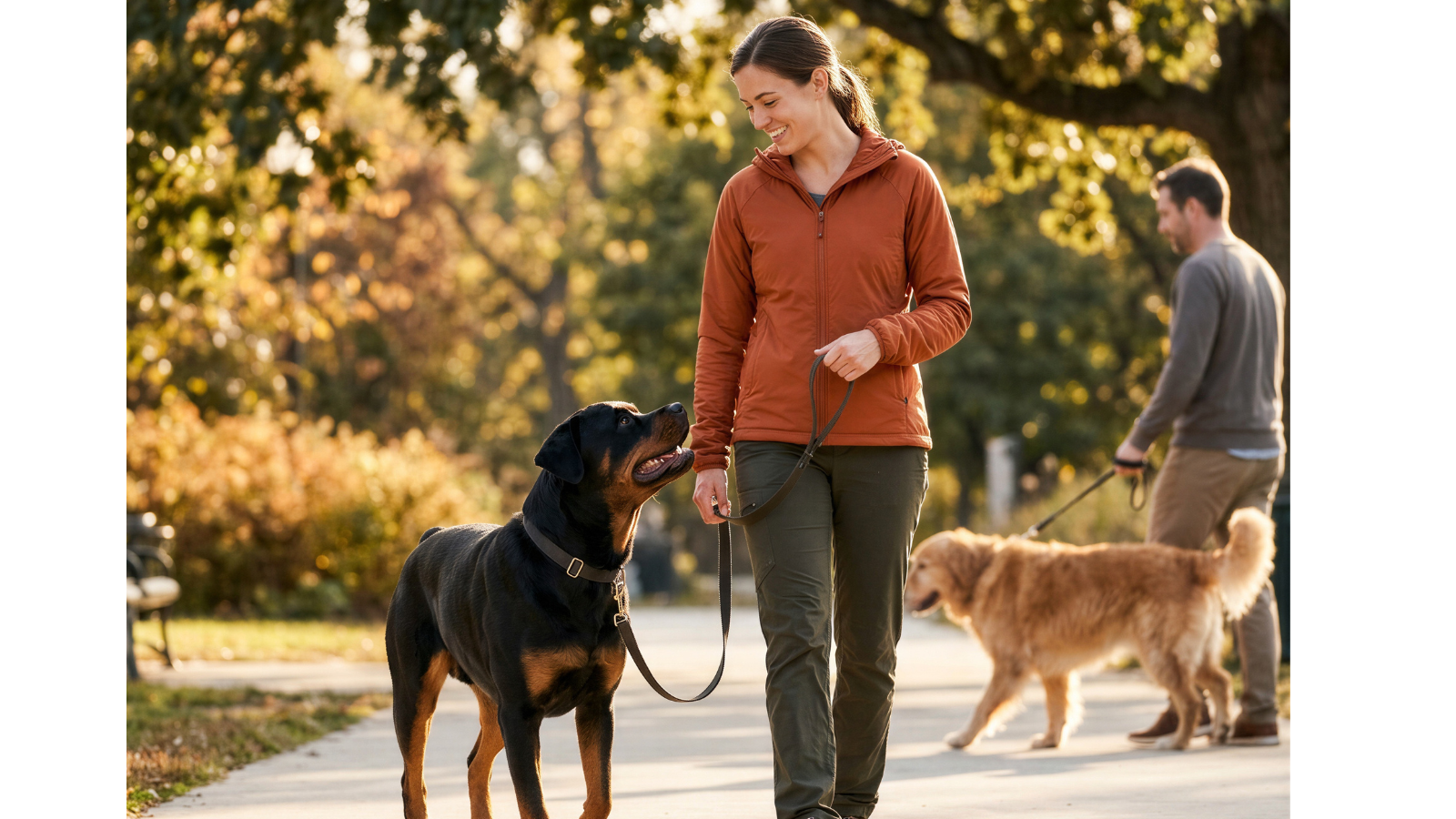
If your puppy has never worn a collar or been on a leash, don't let drop-off be the first time. Put a flat collar on him for short stretches so he stops noticing it's there. Then clip on a light leash and let him drag it around the house under your eye for a few minutes at a time.
The goal isn't leash walking yet. That's our job, and we'd rather teach it right the first time than fix a puppy who learned to fight the leash. The goal is just that the collar and leash feel normal, so when structured leash work starts, he's paying attention to us instead of arguing with the equipment.
Show him the world, a little
Confidence is one of the best gifts you can send a puppy in with, and you build it with calm exposure, not chaos. In the weeks before drop-off, let him experience new and normal things at his own pace. Different floor surfaces, stairs, the sound of the vacuum, a car ride that doesn't end at the vet, people of different shapes and sizes, an umbrella opening, a trash can on the curb.
Notice the word calm. You are not throwing him into a loud, crowded dog park and hoping he toughens up. You are letting him meet the world in small doses and learning that new things are no big deal. A neutral, confident puppy learns faster because he isn't spending all his energy being worried. A puppy who has been kept in a bubble often has to work through his nerves first before any real training can stick.
Teach him to be alone
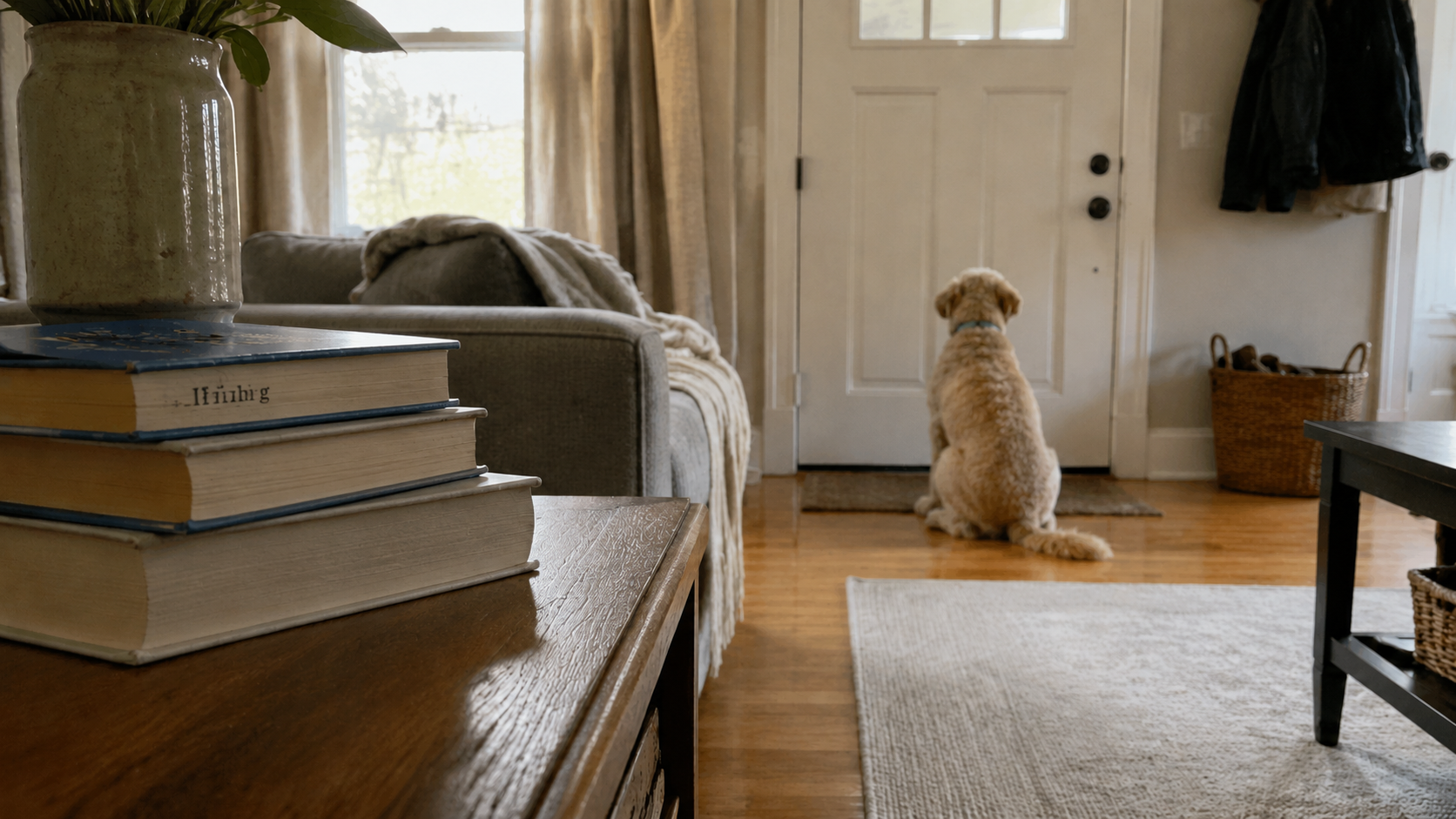
A puppy who has never spent a minute away from your side is going to have a harder first night than one who has learned to settle on his own. So practice a little independence. Put him in his crate or an exercise pen with a chew while you're in another room. Let him figure out that being alone is safe and that you always come back.
This isn't about being cold. It's about raising a puppy who is secure enough to relax without you glued to him. That security travels with him, and it makes his stay with us a whole lot calmer.
Square away the health stuff
This part is practical. Before board & train, make sure your puppy is current on his vaccines and on flea and tick prevention, and that you've had a recent check with your vet. A healthy puppy trains better and keeps the other dogs in our care safe. If your pup is on any medication or has a sensitive stomach, tell us up front so we can keep his routine steady. We'd rather know everything ahead of time than guess.
What to skip
There are a couple of things I'd ask you not to do in the run-up to drop-off.
Don't cram. Some owners try to speed-teach a bunch of commands in the last week so their puppy "shows up ahead." More often than not, that just builds sloppy habits we then have to undo, which slows us down. Leave the obedience to us.
Don't coddle the fears. If your puppy spooks at something, resist the urge to scoop him up and soothe him every time. Stay calm and matter of fact, let him look, and let him figure out it's nothing. How you react teaches him how to react.
And don't overhaul his whole life the day before he leaves. If you're making changes like meal schedules or crate time, start them gently over a couple of weeks so nothing feels sudden.
Drop-off day: check your own energy
Here's the one nobody warns you about. On drop-off day, the calmest thing in the room needs to be you. Dogs read us better than we read ourselves, and a puppy who feels his person tense up and get emotional is going to decide something must be wrong.
So keep the goodbye short and easy. A quick pat, a normal voice, and out the door. You are not abandoning him. You are handing him to people who are going to spend every day building him into a dog you can take anywhere. Trust the process, and let him see that you trust it too.
A quick prep checklist
If you want the short version to stick on the fridge, here it is:
- Feed real meals instead of leaving food out all day
- Make the crate a normal, boring, comfortable place to rest
- Handle him all over, calmly and often
- Let him wear a collar and drag a leash under supervision
- Introduce new sights, sounds, and surfaces at a calm pace
- Practice short stretches of being alone
- Get vaccines, prevention, and a vet check current
- Skip the last-minute cramming and the coddling
- On drop-off day, stay calm and keep the goodbye short
The bottom line
None of this is about turning you into a trainer before your puppy gets here. It's about handing us a puppy who feels safe, likes his food, and is ready to engage, so we can spend his time doing what matters instead of undoing worry. Do these few small things and your puppy hits the ground running.
And remember, when he comes home, the training doesn't stop at our door. We show you how to keep it going, because a trained dog gets to do more, go more places, and spend more time with the people he loves. More manners means more freedom, and it starts before he ever spends his first night with us. If your puppy is younger and you want to start now, our puppy school is built for exactly this stage — and if the mouthing is driving you up the wall, read why puppy biting happens and when it stops.
"Ready to get your puppy started? Give us a call at (801) 592-1524 to set up a [free evaluation](/contact). We serve Salt Lake, Utah, Summit, and Weber counties."
Frequently asked questions
Keep reading
Written by Bart Merrell, certified dog trainer at Top Dog Dog Training.