German Shepherd Training in Utah: What This Breed Actually Needs
By Jeff Belnap ·
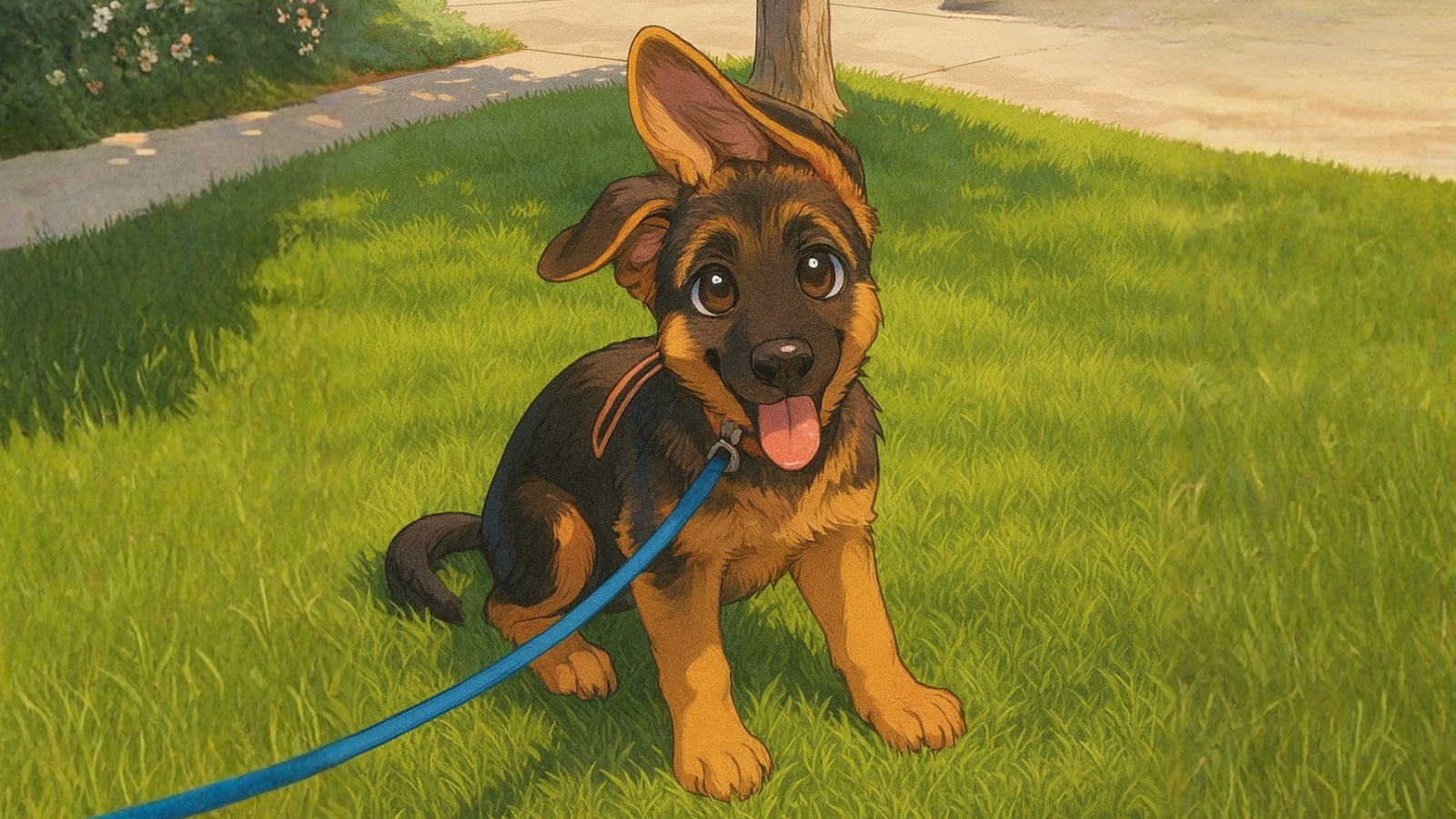
German Shepherds need mental work, physical work, and clear leadership. A Utah trainer on common GSD issues, the adolescent phase, and how to train this breed right.
I've worked with a lot of German Shepherds. Lucy, my therapy dog at Primary Children's. Kalua on search and rescue. Anabel, who I trained to search rubble for first responders after she showed me some serious dog aggression I had to work through first. And a long list of client Shepherds on top of them. This breed is my favorite for a reason. They're brilliant, loyal, driven, and they will absolutely eat your couch if you don't give them a job.
That last part is the whole ballgame with this breed. A German Shepherd isn't a dog you can just own. It's a dog you have to work. Get that right and you've got the best partner of your life. Get it wrong and you've got a smart, powerful, bored animal making its own decisions. Here's what Utah Shepherd owners need to know.
What German Shepherds actually need
It comes down to three things: mental work, physical work, and clear leadership. Miss any one of them and you get problems. Miss all three and you get a rescue post on Facebook.
Mental work. This is the one people underestimate. Shepherds are working dogs bred to think and problem-solve all day. Obedience training, nosework, structured games, and learning new skills tire a Shepherd out faster than a long run does. A dog who gets to use their brain is a calmer dog.
Physical work. A fenced backyard is not exercise. Shepherds need real movement, trails, structured walks, and a way to burn the engine they were born with. In Utah you've got no excuse, and I'll get to that.
Clear leadership. This breed constantly asks, quietly, "what are the rules, and do you actually mean them?" If the answer is fuzzy, a Shepherd will fill the vacuum and start making the rules themselves. Leadership here doesn't mean being harsh. It means being clear and consistent enough that your dog can stop worrying about who's in charge.
Why Utah is almost perfect for a Shepherd
Utah is a fantastic state for this breed. Trails everywhere, real winters they love, and wide open space where a working dog can actually work. Everything a Shepherd thrives on is within a short drive.
But here's the catch. All that access is wasted on a Shepherd you can't trust off-leash, or one who lunges at every hiker and dog on the Bonneville Shoreline. The dream of hiking the Wasatch with your Shepherd off-leash and under control is absolutely reachable for this breed, but only if the foundation is there first.
The adolescent phase nobody warns you about
If your sweet Shepherd puppy turned into a wild, testy maniac somewhere around eight to eighteen months, you are not doing anything wrong. Welcome to Shepherd adolescence.
This is when a lot of the reactivity, the boundary-testing, and the "he never used to do that" behavior shows up. The breed hits a stage where they push on every rule to see what holds. It's normal, it's temporary, and it's also the single most important window to get real structure in place. The owners who ride it out with clear leadership come out the other side with a fantastic adult dog. The ones who wait and hope often find the habits have hardened by age two. Start young if you can, but know that adolescence is a fixable phase, not a life sentence.
Common Utah Shepherd issues we see
These come up over and over, and every one of them is workable.
- Leash reactivity toward other dogs. Extremely common in adolescents. Usually it's frustration or insecurity on a leash, not a dog who wants to fight.
- Suspicion of strangers that tips into barking or lunging. Shepherds are naturally discerning, but without early, positive exposure that instinct can curdle into fear-based reactivity.
- Destruction from under-stimulation. Couches, drywall, shoes. This is almost never spite. It's a bored, under-worked dog telling you the engine needs a job.
- Herding kids and other dogs. Nipping heels and circling is the breed doing what it was built to do, aimed at the wrong target.
- Testing the rules with anyone who isn't clear. A Shepherd will respect a consistent handler and steamroll an inconsistent one.
Notice the pattern. Most of these are the same root problem wearing a different costume: not enough structure, not enough work, not enough clarity. And I want to be clear about the scary-sounding ones. A reactive or suspicious Shepherd usually isn't a "bad" dog. More often it's fear, thin early socialization, genetics, or plain adolescence. That matters, because the fix is training and structure, not writing the dog off.
Our approach with Shepherds
We start where this breed is strongest: their brain and their drive. We lean on marker training and heavy engagement first, because Shepherds love a game and they light up when training feels like one. That builds a dog who wants to work with you instead of against you.
Once the dog knows the rules cold, we layer in fair, low-level corrections so the expectations hold up in the real world, around real distractions. Same principle we use on every dog: the teaching always comes first, and the tool follows. For this breed's off-leash goals, e-collar work, introduced properly and at a level the dog barely feels, is a natural fit, and we do a lot of it because it's what unlocks the trail life most Shepherd owners are after — including places like Millcreek Canyon.
Which program fits depends on the dog. A young Shepherd does great in puppy school before the hard part hits. A serious reactivity or aggression case is usually board & train, where we can put in the daily reps. And an owner who wants to be hands-on and has the time often thrives in our 1-on-1 program. If your Shepherd's biggest issue is leash reactivity, start there. On a free evaluation we'll tell you straight which one your dog actually needs.
"A German Shepherd doesn't need you to be tougher. They need you to be clearer."
Got a Shepherd who's getting away from you?
If your Shepherd is smarter than your current plan, let's talk. Book a free evaluation and I'll give you straight talk about what your dog needs and which program fits. Call us at (801) 592-1524. We serve Salt Lake, Utah, Summit, and Weber counties.
Frequently asked questions
Keep reading

Written by Jeff Belnap, certified dog trainer at Top Dog Dog Training.