Is Board & Train Humane? What Actually Happens in Ours
By Bart Merrell ·
A transparent look at our in-home board & train in Utah: where dogs sleep, a real daily schedule, our methods, and how we know your dog is happy. Max 4 dogs.
"Board & train" means wildly different things at different places, and that's exactly why this question deserves a straight answer. Some board & train facilities are warehouses with kennels stacked to the ceiling, where a dog gets pulled out for a few minutes of drilling and then goes back in a cage for the rest of the day. If that's the picture in your head, no wonder you're asking whether it's humane. You should ask.
Ours is nothing like that. Ours is our home. So instead of just telling you it's humane, let me show you exactly what your dog's four weeks in our board & train actually look like, from where they sleep to how we know they're happy. Nothing hidden.
The word "warehouse" is doing a lot of work
Here's the thing most people don't realize: the concern they have about board & train is really a concern about a specific kind of board & train. The big operations run twenty, fifty, sometimes over a hundred dogs at once. That's an assembly line, and your dog is just inventory moving through it.
We run a maximum of four dogs at a time, in our actual house. Four. That means your dog gets real attention, real supervision, and a real home to learn in, instead of a slot in a kennel row. When you cut the numbers down that far, the whole experience changes, and so does the answer to "is this humane."
Where your dog actually lives
Your dog lives in our house, not a facility. At night they sleep in a crate, the same way a well-adjusted family dog sleeps in a crate, safe and settled. During the day they move between structured training, decompression time out in the yard, and calm indoor time with the family.
That last part matters more than it sounds. We're not just teaching your dog to obey commands in a vacuum. We're teaching them how to be a good dog inside a real home, around real life, which is the exact skill that transfers to your house when they come back to you.
A typical day
Here's what a normal day looks like:
- Morning: potty break, then breakfast earned during the first obedience session
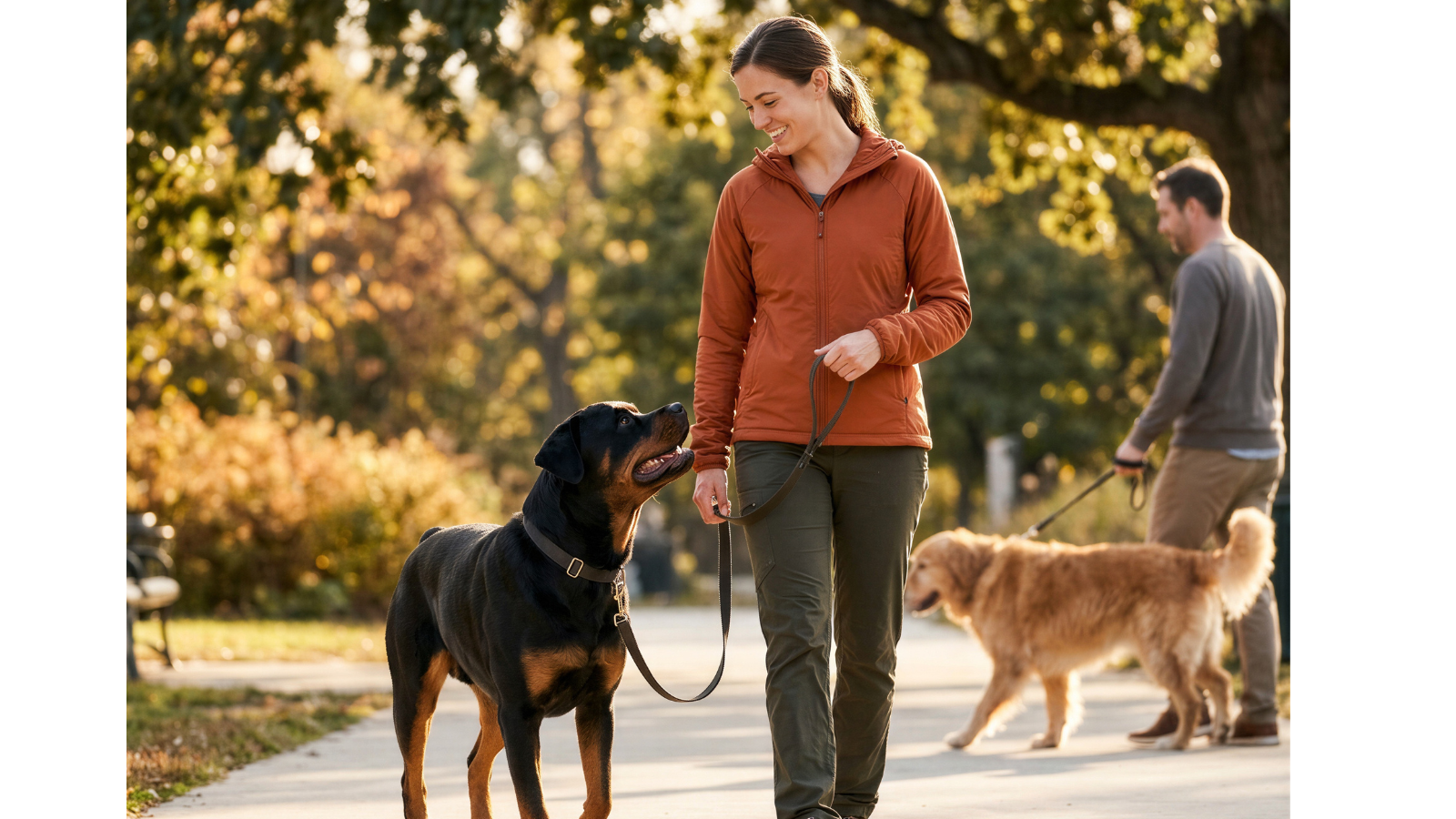
- Late morning: a structured walk with heel work and place work
- Midday: a real nap in the crate, because rest matters as much as reps
- Afternoon: a field trip to Home Depot, a park, or downtown for real-world practice
- Evening: dinner worked as a training session, calm time inside with the family, then bed
Notice how much of that day is rest, decompression, and normal life. It isn't drill, drill, drill. A dog worked into the ground is a stressed dog, and a stressed dog doesn't learn.
"But won't my dog be caged all day?"
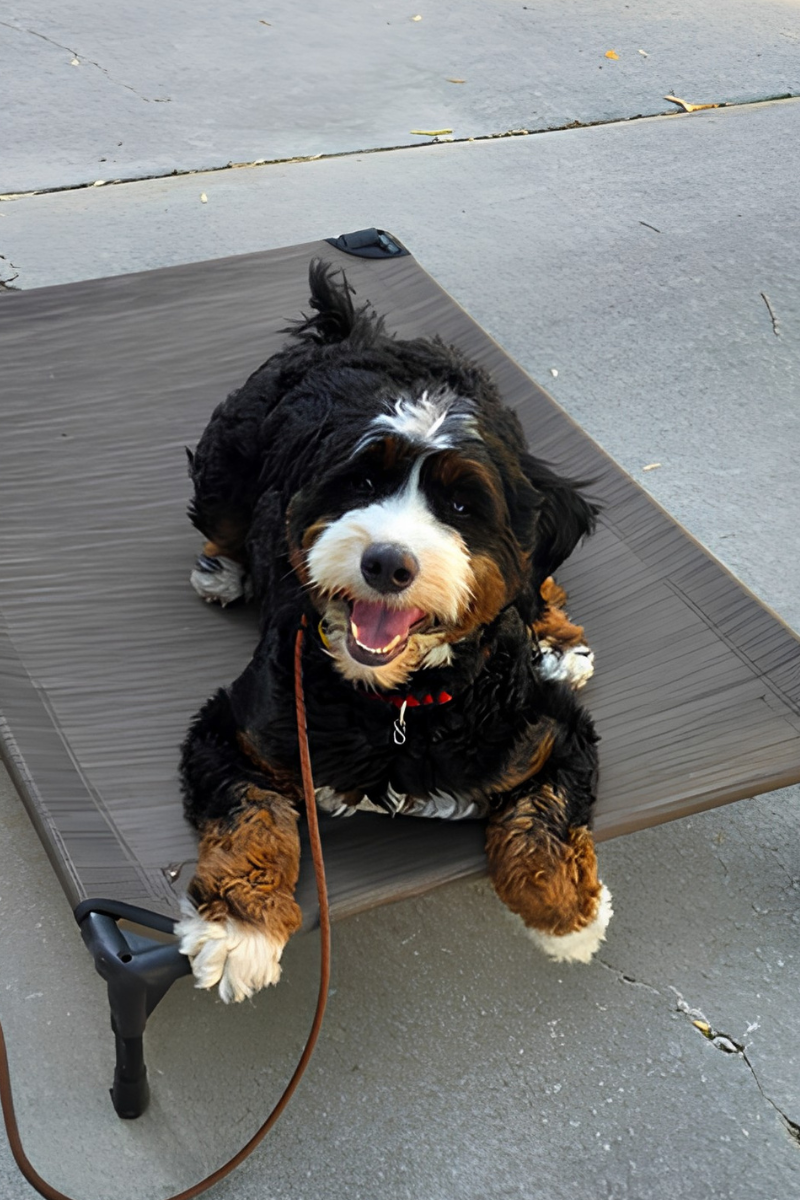
No. The crate is for sleeping and resting, the same as it is for any healthy house dog. Dogs actually need a lot of sleep, and structured rest is part of what keeps them calm and able to learn. The crate is a bedroom, not a storage unit. Your dog spends their waking hours training, walking, exploring the world, playing, and hanging around the house with us.
"Will my dog still love me, or bond to you instead?"
This is the fear I hear most, so let me put it to rest. Your dog will still be your dog. Four weeks is not enough time for a dog to forget the family they love, and that's not how bonding works anyway.
What actually happens is that we teach you everything before your dog comes home. We send you videos during the stay, then walk you through a long, hands-on hand-off the day you pick up, plus three follow-up sessions after. You don't get a dog who listens to us. You get a dog who listens to you, and a bond that usually gets stronger, because for the first time the two of you can actually understand each other.
What methods do you use?
Humane comes down to how a dog is treated, so here it is plainly. We lead with rewards. Every dog in our program earns their meals one piece at a time for making good choices. When a correction is needed, it's for something the dog already understands, it's fair, it's low-level, and it always comes after the teaching, never before. We don't use fear, and we don't use pain. If you want the longer version, we wrote a whole post on our balanced approach.
How we know your dog is happy
I'll be honest with you, because that's the only way this works. There's almost always a short adjustment period. New place, new people, new expectations. A dog might be a little unsure for the first day or two, and that's normal.
But within a few days, you see the dog come back. The tail comes up. The appetite returns. They start offering good behaviors on their own instead of being asked. They sleep soundly and they lean in for affection. We send you video updates through the stay so you get to watch it happen, not just take our word for it. And if a dog ever truly wasn't adjusting, we wouldn't hide that from you. We'd call you and talk it through. That's a promise.
What "humane" actually means
Here's the part I most want you to understand. Humane is not the absence of correction. Humane is the absence of confusion. A dog who never knows what's expected of them lives in a constant low hum of anxiety, always guessing, never sure if they're about to get it wrong. That's not kindness. That's just leaving a dog to figure out a human world with no map.
A dog who finally understands the rules can stop worrying about them. That's the whole point of what we do.
"Structure is kindness. A dog with clear boundaries is a dog that can relax."
Come see for yourself
The best answer to "is it humane" isn't a paragraph on a website. It's an open door. Come out for a free evaluation, meet Bart and Jeff, and see exactly where your dog would stay. We've got nothing to hide, and we'd rather you see it with your own eyes.
Want to see it for yourself? Give us a call at (801) 592-1524 to set up a free evaluation. We serve Salt Lake, Utah, Summit, and Weber counties.
Frequently asked questions
Keep reading
Written by Bart Merrell, certified dog trainer at Top Dog Dog Training.